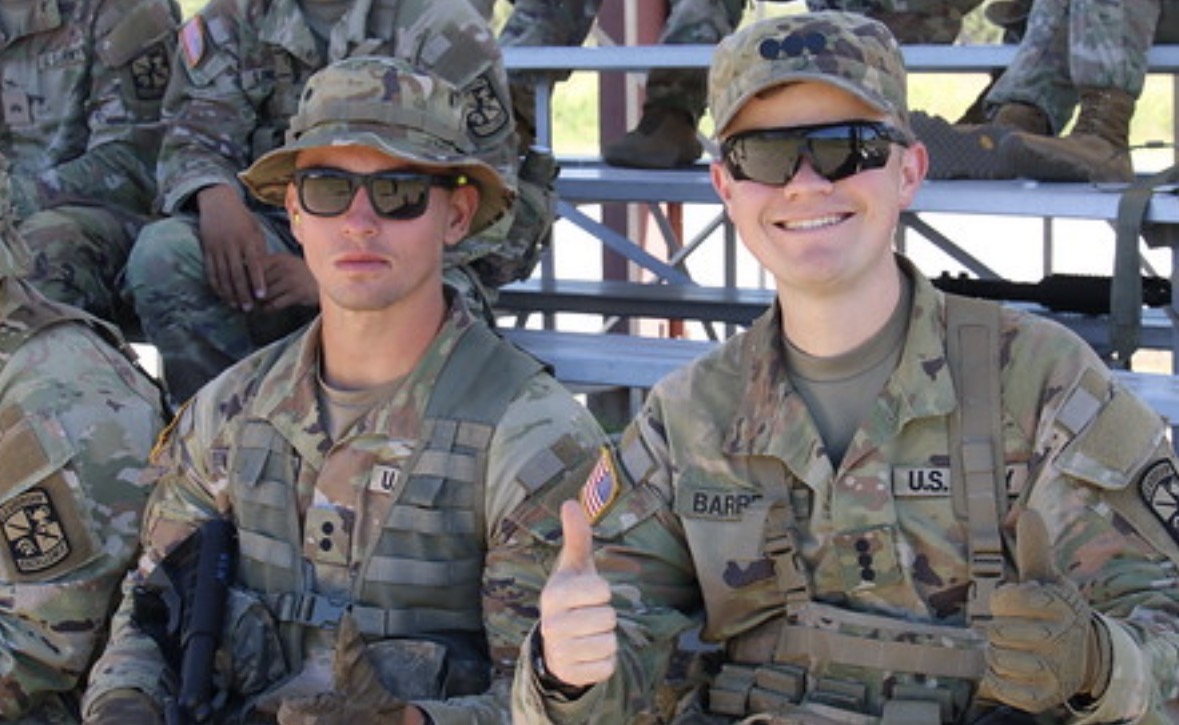
Balancing Army ROTC, college, running a coaching business, and training as a hybrid athlete isn’t always as glamorous as it might look on social media.
Most mornings start before sunrise with ROTC physical training. Other days involve classes, studying, working with clients, and trying to squeeze in a workout before the day ends. Add marathon or Ironman training into the mix, and suddenly there aren’t enough hours in the day.
As a college student, Army ROTC cadet, Ironman finisher, and strength athlete, I’ve learned that balancing everything isn’t about having the perfect schedule. It’s about learning how to adapt when things don’t go according to plan.
One of the biggest lessons I’ve learned is that you can’t expect every training session to be perfect.
There are days when ROTC physical training leaves my legs exhausted before I even begin my scheduled workout. Other days, academic responsibilities take priority, and a two-hour training session becomes a 45-minute workout.
Early on, it’s easy to fall into the mindset that missing or modifying a workout means you’re falling behind.
But I’ve realized that consistency over months and years matters significantly more than one individual workout.
Something that often gets overlooked is the physical demand ROTC places on your body.
Between early morning PT, running, rucking, field training exercises, and other military responsibilities, your body is already accumulating fatigue.
When you’re also training for endurance events or trying to build strength, that additional workload matters.
You can’t treat ROTC workouts as separate from your actual training. Your body doesn’t distinguish between a five-mile run during PT and a five-mile run on your training plan.
Both create stress, and both require recovery.
Understanding this has helped me become more intentional about managing training intensity, volume, and recovery.
Finding the motivation to train has rarely been my biggest issue. Finding enough time to recover is a different story.
When you’re balancing school, ROTC, coaching, and endurance training, sleep and recovery can easily become an afterthought.
But training harder doesn’t automatically mean you’re getting better.
I’ve dealt with injuries and setbacks that have forced me to recognize the importance of listening to my body.
Sometimes the most productive decision is to reduce training volume, take an additional rest day, or replace a hard session with something easier.
Being disciplined doesn’t always mean pushing through fatigue. Sometimes it means knowing when to back off.
One thing I’ve learned from preparing for Ironman Texas and now working toward a sub-three-hour marathon is that you can’t maximize every aspect of fitness simultaneously.
There are periods when endurance performance needs to take priority and other periods when strength development becomes the main focus.
ROTC adds another layer because military readiness is a responsibility that doesn’t disappear when you’re preparing for a race.
Instead of trying to improve everything at once, I’ve learned to organize my training around my current priorities while maintaining the other components of fitness.
That’s one of the biggest principles behind my approach to hybrid training.
I think social media sometimes creates an unrealistic picture of what discipline looks like.
It’s easy to post the early morning workouts, long runs, and heavy lifts. What’s harder to show is the exhaustion, missed sessions, schedule changes, and days when motivation is nonexistent.
The reality is that discipline isn’t about doing everything perfectly.
It’s about consistently showing up, making adjustments when necessary, and understanding that progress isn’t always linear.
Some weeks, everything clicks. Other weeks, you’re simply doing what you can to keep moving forward.
Both are part of the process.
Balancing Army ROTC, college, and endurance training has taught me lessons that extend far beyond fitness.
It’s taught me time management, resilience, patience, and the importance of prioritizing what actually matters.
Finishing Ironman Texas while managing these responsibilities was one of my proudest athletic accomplishments, but the lessons I learned throughout the preparation were just as valuable.
If there’s one thing I want people to take away from this, it’s that you don’t need a perfect schedule or unlimited free time to pursue ambitious fitness goals.
You need a realistic plan, the willingness to adapt, and the consistency to keep showing up.
That’s the philosophy I bring into Wilkerson Trained: helping athletes build strength, endurance, and confidence while balancing the demands of real life.
Views expressed in this post are my own and do not reflect the views or opinions of the U.S. Army or any other military organization. This content is for personal expression and fitness promotion only.